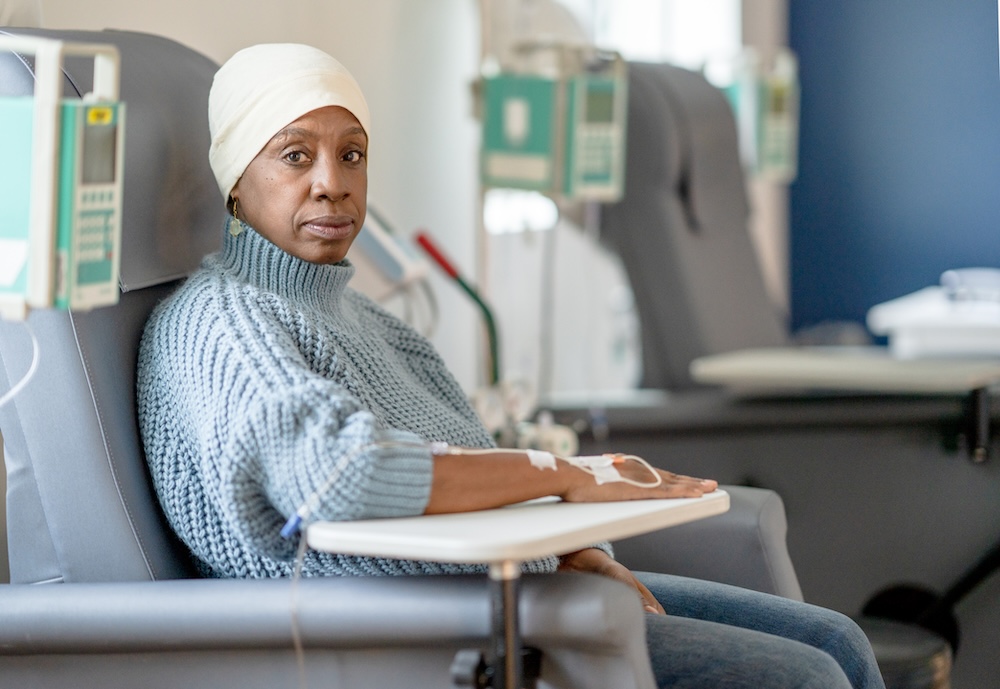
A cancer treatment plan depends on more than the therapy selected to control a tumor. Patients also need to be well enough to receive treatment, recover between doses, and proceed to the next stage of care. An infection can change that plan, and antimicrobial resistance (AMR) can make the infection harder to treat.
For patients and clinicians, a postponement can bring uncertainty to an already demanding course of care. Waiting for an infection to resolve may be the safest decision, but the team must also consider when cancer treatment can resume. The answer depends on the patient, the cancer, and the treatment being given.
Studies have documented interruptions in cancer treatment following the identification of infections and have associated resistant infections with recurrence or poorer outcomes. However, they have not to date established a general estimate of the additional treatment disruption caused specifically by AMR. That gap makes it especially important to examine both sides of the problem: how infection care can be improved now, and how future studies can determine whether those improvements help patients receive cancer treatment as planned.
When Infection Changes the Treatment Plan
An infection can affect cancer care in ways that do not appear in mortality figures or measures of antibiotic use. The consequence may be a postponed appointment, a reduced dose, or a treatment course that cannot proceed on its original schedule.
In a prospective study published in the Journal of Infection, researchers from Tel Aviv University and Rabin Medical Center followed 547 adults with solid or hematologic cancers receiving chemotherapy.1 They documented 306 episodes in which treatment was delayed, canceled, or given at a reduced dose. Fever or infection was the recorded reason for 73 episodes, representing 23.9% of those treatment modifications. Other reasons included neutropenia, a reduction in infection-fighting neutrophils, and thrombocytopenia, a reduction in platelets.
The researchers also found an association between upper respiratory infections and chemotherapy delays. Their study did not identify AMR as the cause of those interruptions, but it showed that infection-related changes to treatment are not confined to patients with the most severe infections.
A study at Hospital Clínic in Barcelona provides a more specific example. Researchers examining biliary-source bloodstream infections in oncology patients recorded a cancer-treatment delay after 110 of 400 infection episodes.2 Among episodes associated with a delay, the reported mean was 31.6 days. Published in Microbiology Spectrum, the study describes a particular population and should not be treated as an estimate for cancer care generally.
The importance of timing also varies. In a population-based breast cancer study published in JAMA Oncology, researchers from The University of Texas MD Anderson Cancer Center in Houston and the Cancer Prevention Institute of California found that starting adjuvant chemotherapy 91 or more days after surgery was associated with worse overall and breast cancer–specific survival compared with starting within 30 days.3 The investigators did not establish that infections caused those delays, and the findings cannot predict the effect of an individual postponement, but they show why treatment timing warrants attention in some settings
A delay can be the safest clinical decision for a patient who needs time to recover. Preventing avoidable infections and managing those that occur can help care teams address one reason a treatment plan may need to change.
Different Patients, Different Infection Risks
Infection risk is not uniform across oncology. It depends in part on the cancer, the treatment, and the care a patient receives.
Neutropenia is an important concern, particularly when cancer treatment reduces the number of neutrophils available to respond to infection. Guidance from the National Comprehensive Cancer Network identifies factors including hematopoietic cell transplantation, graft-versus-host disease, and immunosuppressive treatments among the considerations relevant to infection prevention and management.4
For patients with solid tumors, infection may arise in several settings. Risks are associated with tumor-related obstruction, damage to skin or mucosal barriers, cancer treatment, surgical procedures, and devices such as catheters and stents. Common infection sites include the respiratory tract, bloodstream, urinary tract, skin, and surgical sites.5
Resistance adds to that diversity. The organisms encountered and the likelihood that they will respond to a given antimicrobial can differ across patient populations and care settings. In a multicenter outpatient study published in The Lancet Oncology, 8.7% of tested Enterobacterales isolates from patients with cancer were classified as multidrug resistant, compared with 4.5% of isolates from patients without cancer.6 These figures concern organisms submitted for testing, not the proportion of all patients who developed a resistant infection.
A scoping review identified 274 articles on resistant bacterial infections in patients with hematologic malignancies.7 Of 81 studies that reported mortality, 53 found higher mortality associated with AMR infections. The studies differed in their populations and methods, so their findings do not provide one mortality estimate applicable to every patient.
Resistance can also be relevant to recurrent infection. In the Hospital Clínic biliary bloodstream-infection study, episodes caused by multidrug-resistant Gram-negative bacteria were independently associated with recurrence.2 Researchers at Hospital Universitari Germans Trias i Pujol reported a related finding in a separate retrospective cohort: prior isolation of a multidrug-resistant organism was associated with recurrent biliary-source bloodstream infection.8 The latter study also reported cancer-treatment delays or discontinuation after infection.
These findings place resistance, recurrent infection, and disruption of cancer care in the same clinical settings. They leave open whether, and by how much, a resistant infection increases the likelihood or duration of a treatment interruption compared with a susceptible infection.
Preventing Infection Before It Interrupts Care
Teams can approach prevention from several directions: reducing opportunities for infection during care, using preventive antimicrobials selectively, and supporting patients at risk for treatment-related neutropenia. These strategies address different problems and may involve different members of the care team.
For a patient with a central line, prevention extends beyond the hospital. Clinic staff, home-care personnel, and families may all participate in maintaining the line and identifying problems that require attention.
In a single-institution interrupted time-series study published in Pediatrics, researchers from The Children’s Hospital at Montefiore, Johns Hopkins, and collaborating institutions evaluated a central-line maintenance bundle for ambulatory pediatric oncology patients.9 It addressed aseptic line access, changes to line components, and assessment of problems and education needs at home. The mean central line-associated bloodstream-infection rate declined from 0.63 to 0.32 per 1,000 central-line days during the intervention period.
Preventive antimicrobial treatment raises a different question: which patients are likely to benefit from taking an antimicrobial before an infection develops? A randomized trial by the Children’s Oncology Group published in JAMA evaluated levofloxacin prophylaxis in children with acute leukemia and, separately, in children undergoing hematopoietic stem cell transplantation.10 Among children with acute myeloid leukemia or relapsed acute lymphoblastic leukemia, bacteremia occurred in 21.9% of those assigned to prophylaxis and 43.4% of those assigned to no prophylaxis. The reduction in the transplantation cohort was not statistically significant.
Adult evidence also supports preventive benefit in a defined population. In a randomized, placebo-controlled trial conducted by the multicenter SIGNIFICANT Trial Group, researchers studied levofloxacin prophylaxis in patients receiving cyclic chemotherapy for solid tumors or lymphoma who were considered at risk for temporary severe neutropenia.11 Fewer patients assigned levofloxacin had a febrile episode during the first chemotherapy cycle than those assigned placebo. The trial did not systematically evaluate antibacterial resistance, and its findings should not be interpreted as a recommendation for routine prophylaxis across all cancer regimens.
For adults with cancer-related immunosuppression, the 2018 American Society of Clinical Oncology and Infectious Diseases Society of America guideline recommended antibacterial and antifungal prophylaxis for patients at high risk, including those expected to experience profound, prolonged neutropenia.12 The decision depends on the patient’s treatment circumstances rather than the diagnosis of cancer alone.
Supportive care can address treatment-related neutropenia through a different mechanism. In a randomized breast cancer trial, patients assigned pegfilgrastim had lower rates of febrile neutropenia than patients assigned placebo: 1% versus 17%.13 Febrile neutropenia-related hospitalization was reported in 1% and 14%, respectively. Pegfilgrastim is not an antimicrobial, and the trial did not establish an effect on AMR.
The 2026 American Society of Clinical Oncology guideline update on white blood cell growth factors addresses their use to prevent or manage neutropenic events and incorporates patient-specific risk into prophylaxis decisions.14 Together, these approaches show that protecting cancer care can involve infection-control practices, selective antimicrobial prophylaxis, and supportive treatment chosen for the patient and regimen.
From the First Fever to Targeted Treatment
Prevention cannot eliminate every infection. When a patient develops a fever or another indication of possible infection, the care team faces a sequence of decisions: how quickly to assess the patient, what treatment to start, which tests to obtain, and how to adjust treatment as information becomes available.
The first step depends partly on the care pathway. A pediatric emergency-department quality-improvement study evaluated a standardized process before arrival and a rapid absolute neutrophil count for febrile hematology and oncology patients.15 The changes increased the proportion of patients receiving antibiotics within 60 minutes of arrival.
The initial antibiotic decision is often made before the causative organism and its susceptibility are known. The TARZAN study, published in the Journal of Antimicrobial Chemotherapy, examined this challenge in neutropenic patients with hematologic malignancies who developed bloodstream infections caused by carbapenemase-producing Enterobacterales.16 Researchers from Bellvitge University Hospital and collaborating centers conducted a retrospective, international analysis of 54 infection episodes in patients treated with ceftazidime/avibactam. Initial empirical therapy was reported as inadequate in 47% of episodes, illustrating the difficulty of selecting an active antibiotic before the pathogen and its resistance are fully characterized. The study describes a selected, high-risk population and did not include a control group for comparing ceftazidime/avibactam with other treatments.
Testing helps clinicians reassess that initial choice. Australasian consensus guidance on neutropenic fever identifies blood cultures as an essential part of investigating suspected bloodstream infection and recommends collecting them at the onset of fever, ideally before antibiotics.17 The guidance also recognizes that difficulty obtaining a peripheral sample should not indefinitely delay treatment.
Appropriate testing is a decision in its own right. At Duke University Hospital, researchers evaluated a blood-culture decision algorithm in a solid-tumor oncology unit.18 After implementation, blood-culture events per 100 patient-days declined by 38%. The investigators also reported improved appropriateness and no observed increase in the adverse outcomes they assessed. The single-center study, published in Supportive Care in Cancer, addressed how to guide culture use; it does not argue against obtaining cultures when clinically indicated.
Once a blood culture becomes positive, molecular tests can identify organisms and selected resistance genes included in the assay. Those results may arrive sooner than conventional testing, but they answer a defined question: whether the test detected one of its targets. The Australasian guideline emphasizes that molecular assays do not replace phenotypic antimicrobial susceptibility testing.
Faster susceptibility information can support a change in treatment when it is connected to a team responsible for acting on the result. In a randomized trial published in Clinical Microbiology and Infection, researchers at Seoul National University Hospital and College of Medicine evaluated rapid phenotypic susceptibility testing within an antimicrobial stewardship approach for patients with hematologic malignancies and positive blood cultures.19 At 72 hours, 80.4% of patients in the rapid-testing group were receiving optimal targeted antibiotics, compared with 56.7% in the conventional-testing group.
The intervention joined testing and stewardship, so the finding cannot be assigned to the laboratory technology alone. It shows the value of connecting a faster result to a treatment decision: the outcome studied was the proportion of patients receiving targeted antibiotics, not simply the time at which a result became available.
Information about a patient’s prior colonization can also inform planning before a new episode. The Australasian guideline recommends infectious-disease consultation for a tailored empirical plan in the defined circumstances of systemic compromise and known colonization with carbapenemase-producing organisms, ideally before systemic cancer treatment begins.
Making Infection Care Work Across Settings
The value of a diagnostic or treatment strategy depends on whether the people caring for a patient can use it in their setting. The International Agency for Research on Cancer has noted that clinical microbiology laboratories may be limited or located away from cancer centers in resource-restricted settings.20 That separation can make obtaining and communicating the information needed for treatment decisions more difficult.
A study at Hospital Civil de Guadalajara Dr. Juan I. Menchaca in Mexico illustrates how a pediatric oncology team addressed several parts of the care process together.21 Researchers retrospectively compared an earlier period of standard care with a later period after introduction of a bundle for children with cancer and suspected bloodstream infection. The bundle included prompt clinical evaluation, initial fluid support, blood cultures, and empirical antibiotic treatment. Staff training and review of local susceptibility information supported the changes.
Among patients with confirmed bloodstream infections included in the mortality comparison, the investigators reported infection-related deaths in 12 of 29 patients in the earlier period and 9 of 47 after implementation. These patient counts differ from the number of infection episodes reported elsewhere in the study because some patients had more than one episode. The comparison spans different periods, and diagnostic practices changed alongside treatment practices, so the mortality difference cannot be attributed to a single component of the bundle.
The Guadalajara study did not measure the effect of distance from a laboratory or establish that its approach would transfer unchanged to another center, but it demonstrates that implementation involves more than a test or a drug: staff need a process for recognizing suspected infection, obtaining microbiology information, and selecting treatment based on the resources and information available.
Using Existing Antimicrobials More Effectively
The antibiotic selected at the outset is not always the one a patient needs for the entire course. As clinical and microbiological information becomes available, teams can reassess the choice, narrow treatment when appropriate, or consider when empirical therapy can stop.
One way to support the initial decision is to give clinicians a patient-specific estimate of resistance risk at the point of prescribing. In a 2026 secondary analysis of four cluster-randomized trials, researchers examined a stewardship bundle that used electronic health record information to estimate that risk and recommended standard-spectrum antibiotics for selected patients at low risk.22 Among non–critically ill hospitalized patients with cancer in the infection categories studied, the approach was associated with reduced extended-spectrum antibiotic use, without observed differences in the safety outcomes assessed. The findings apply to the non–critically ill patients and infection categories studied. The authors reported insufficient power to assess safety in the small subgroup with severe neutropenia.
A later reassessment may concern how long empirical antibiotics are needed when a patient has recovered and no cause of fever has been identified. In the adult How Long trial, patients with hematologic malignancies who were assigned to stop empirical treatment after clinical recovery and at least 72 hours without fever had more antibiotic-free days than those assigned to wait additionally for neutrophil recovery.23
A 2026 randomized Danish trial examined a related approach in children receiving intensive cancer treatment.24 During 28 days of follow-up, mean antibiotic exposure was 8.1 days in the shorter-treatment group and 13.5 days in the longer-treatment group. Both trials evaluated defined protocols for selected patients. Neither should be read as a recommendation to stop treatment for an identified resistant infection.
Developing and Evaluating Additional Options
Stewardship depends on having effective treatments available when resistant infections occur. Evaluating an antimicrobial for oncology care can involve several kinds of evidence, each answering a different question.
Researchers at MD Anderson tested cefiderocol against Gram-negative bacterial isolates collected from cancer patients. In the laboratory study published in Antimicrobial Agents and Chemotherapy, the drug inhibited 97.5% of 478 isolates at a concentration of 4 mg/L or less.25 The result describes activity against the tested isolates under laboratory conditions; it is not a clinical cure rate.
Clinical experience adds information about use in patients. Investigators at Hospital Clínic de Barcelona and Ospedale Policlinico San Martino in Genoa retrospectively studied 28 patients with hematologic malignancies who received cefiderocol.26 They reported 30-day all-cause mortality of 35.7% and identified resistance in some isolates. The small, uncontrolled cohort cannot establish comparative effectiveness, but it illustrates why clinical outcomes and susceptibility findings both matter when evaluating treatment in a high-risk population.
Antifungal development addresses another part of the infection challenge. The phase II AEGIS study evaluated investigational fosmanogepix in adults with invasive mold disease and limited treatment options. Its small, open-label design supports further investigation but does not establish comparative benefit.27 Limited treatment options also did not necessarily mean that every participant had a confirmed resistant infection.
Laboratory studies, clinical cohorts, and controlled trials contribute different evidence. For oncology teams, the question is how well that evidence applies to the patients who may need treatment and what remains uncertain when a new option enters care.
Measuring Whether Infection Care Protects Cancer Care
For a patient and oncology team, successful infection care may mean that the infection resolves and the next stage of treatment can proceed. Yet studies evaluating infection interventions do not always measure what happens to the cancer-treatment plan.
Oncology research offers ways to record those changes. Researchers at Kaiser Permanente Southern California studied patients receiving chemotherapy for breast cancer, lung cancer, and non-Hodgkin lymphoma and evaluated treatment patterns that included delays of at least seven days and relative dose intensity.28 Recording such measures can show that treatment changed; understanding why it changed requires information about the circumstances surrounding the decision.
The difficulty of establishing that connection is evident in a Swedish population-based study of patients after breast cancer surgery. Published in BJS, the study found an association between major systemic infection within 90 days of surgery and later distant recurrence and mortality after adjustment for measured factors.29 The investigators did not have data on the timing of adjuvant chemotherapy or the reasons treatment was delayed or omitted, and therefore could not establish that a chemotherapy delay explained the association or that AMR was responsible.
Future studies can bring infection and oncology outcomes closer together. Alongside infection response and antimicrobial exposure, researchers could record time to restarting cancer treatment, postponed or missed cycles, dose reductions, relative dose intensity, and completion of the intended course. They could also document whether the infecting organism was resistant or susceptible and identify other reasons the treatment plan changed.
Comparisons between resistant and susceptible infections, designed to account for those other factors, would help clarify the additional disruption attributable to AMR. Shared measures could also help oncology, infectious disease, laboratory, and stewardship teams evaluate whether changes in prevention, diagnostics, and prescribing help patients progress through cancer care as planned.