AMR Therapeutic Landscape

The antibiotic discovery void is not a failure of scientific imagination. It is a collision between biology, chemistry, clinical development, stewardship, and economics.
The First Antimicrobial Revolution
The antimicrobial era did not begin with one drug. It began with a series of discoveries that revealed something extraordinary: microbes, plants, and synthetic chemistry could yield compounds capable of selectively suppressing infectious organisms.


Penicillin became the defining symbol of the antibiotic age, but it was part of a broader transformation. Sulfonamides preceded the widespread clinical use of penicillin and demonstrated that an antibacterial drug circulating in the bloodstream could rid the patient of an infection. Streptomycin opened a new path for tuberculosis treatment. Tetracyclines, macrolides, aminoglycosides, glycopeptides, cephalosporins, polymyxins, and other classes expanded the therapeutic armory in rapid succession.
This was the golden age of antibiotic discovery. Many of the foundational antibacterial classes still used today emerged between the 1930s and 1960s. During this period, natural products from soil microorganisms, microbial fermentation, and medicinal chemistry generated a remarkable sequence of clinical breakthroughs.



Antibiotic Approvals Per Decade: The Numbers Hide the Problem
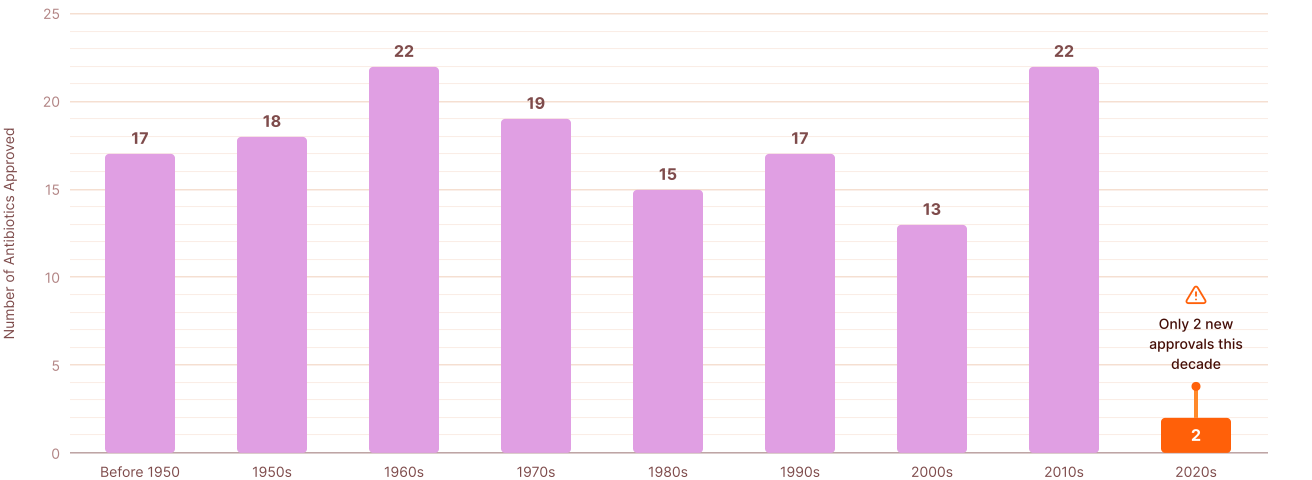
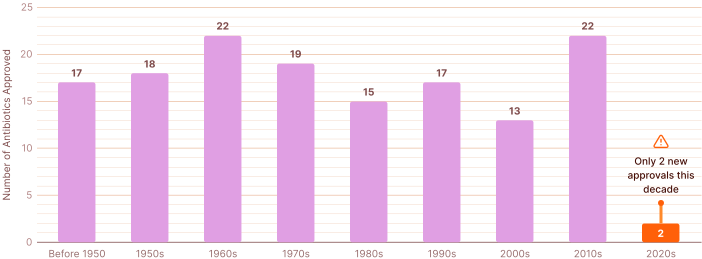
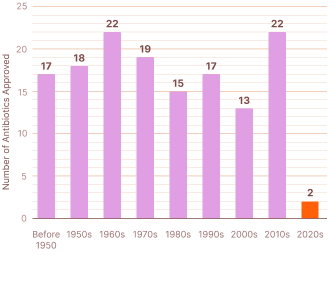
Antibiotic approvals have continued across decades, but have dropped dramatically in recent years. To make matters worse, many of the newer agents are derived solely from established antibiotic classes, and few of them kill bacteria by an entirely new mechanism.
The Antibiotic Discovery Void
Fewer new classes of antibiotics are being approved these days because fewer are being developed. Many major classes were introduced in rapid succession from the late 1920s through the 1960s, while far fewer have been introduced since then.
This slowdown in antibiotic discovery has multiple causes, but no single explanation is sufficient.

The low-hanging fruit was picked first.
Early screens repeatedly found potent natural products. Over time, rediscovery became common, and novel scaffolds became harder to identify.
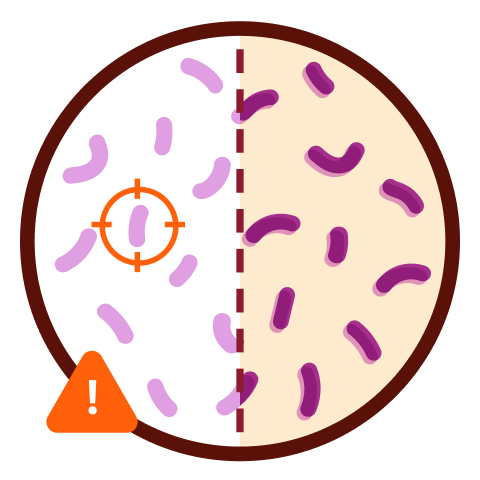
Gram-negative bacteria are challenging targets.
Many high-priority resistant organisms are gram-negative pathogens with outer membranes, efflux pumps, permeability barriers, and resistance enzymes that make drug penetration and retention extremely difficult.

Toxicity narrowed the field.
Molecules that kill bacteria can also interfere with human cells, mitochondria, microbiomes, or immune balance. Selective toxicity is difficult.
Clinical development became more complex.
Trials for resistant infections require the right patients, the right pathogens, rapid diagnostics, appropriate comparators, and feasible endpoints.
Commercial incentives collapsed.
The most societally valuable antibiotics are often held in reserve, limiting revenue and making the sector unattractive to investors.
The Aging Antibiotic Armory
The average antibiotic was approved 46 years ago, making them significantly older than the average antifungal, antiparasitic, or antiviral therapy.
Many older antibiotics remain clinically essential. For example, penicillins, cephalosporins, tetracyclines, aminoglycosides, macrolides, carbapenems, glycopeptides, and sulfonamides continue to save lives every day.
The longer an antimicrobial class is used, however, the greater the opportunity for resistance to emerge and spread across pathogens, hospitals, communities, agriculture, and the environment.
Average Age Since Approval
46 Years
Bacterial

34 Years
Fungal

26 Years
Parasitic

21 Years
Viral

Among marketed antimicrobial therapies in the supplied dataset, antibiotics are the oldest therapeutic category on average, underscoring how much modern medicine still depends on drug classes discovered and approved decades ago.
An Antibiotic Approval Slowdown
When comparing antibiotics, antivirals, and antifungals by decade, there is clear divergence. Antibiotics dominate the early decades of antimicrobial approval history. Antivirals grow later, especially after the HIV era, and continue to represent a larger share of newer approvals. Antifungal approvals remain comparatively smaller but persistent.
Number of U.S. Drug Approvals by Decade
-
Antibiotics
-
Antivirals
-
Antifungal
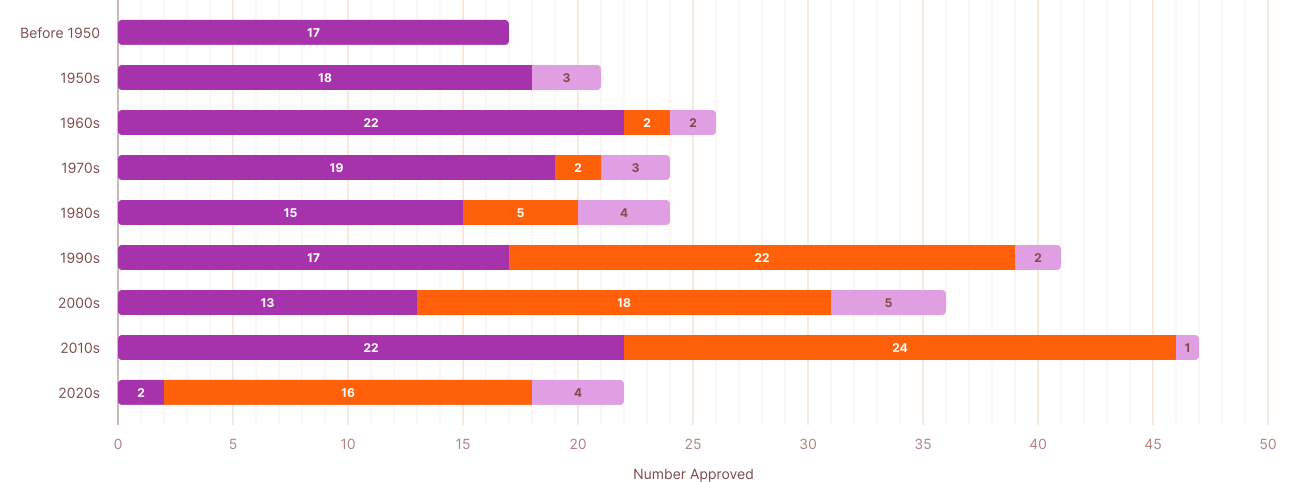
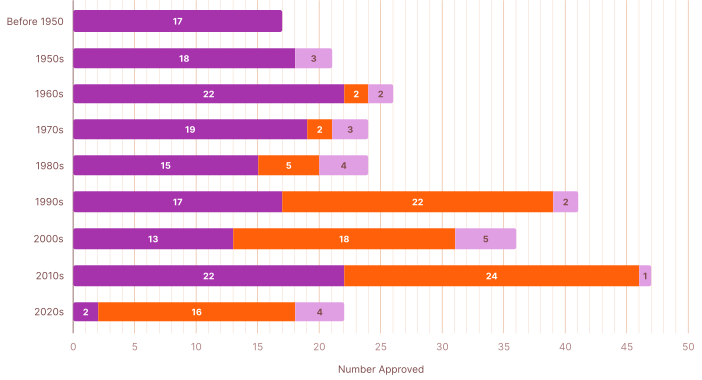
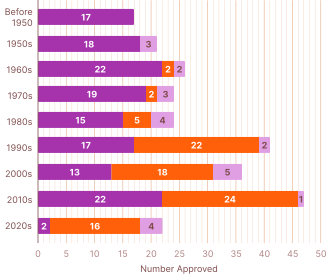
The antimicrobial landscape has shifted over time. Antibiotics defined the early decades of antimicrobial therapy, while antiviral approvals expanded significantly in later decades following major investment in HIV, hepatitis, respiratory viruses, and emerging infectious disease preparedness.
Antimicrobial Approvals Compared With Oncology and Rare Disease
While oncology, rare disease, and antimicrobial therapies cannot be directly compared, the comparison reveals where innovation systems are commercially working and where they are not. The supplied data suggest that since 2013, antimicrobial approvals have been lower than oncology approvals and closer to rare disease approval volumes, despite the large scale of infectious disease burden and the population-level threat posed by AMR.
NDAs by Year
-
Antimicrobial
-
Oncology
-
Rare disease
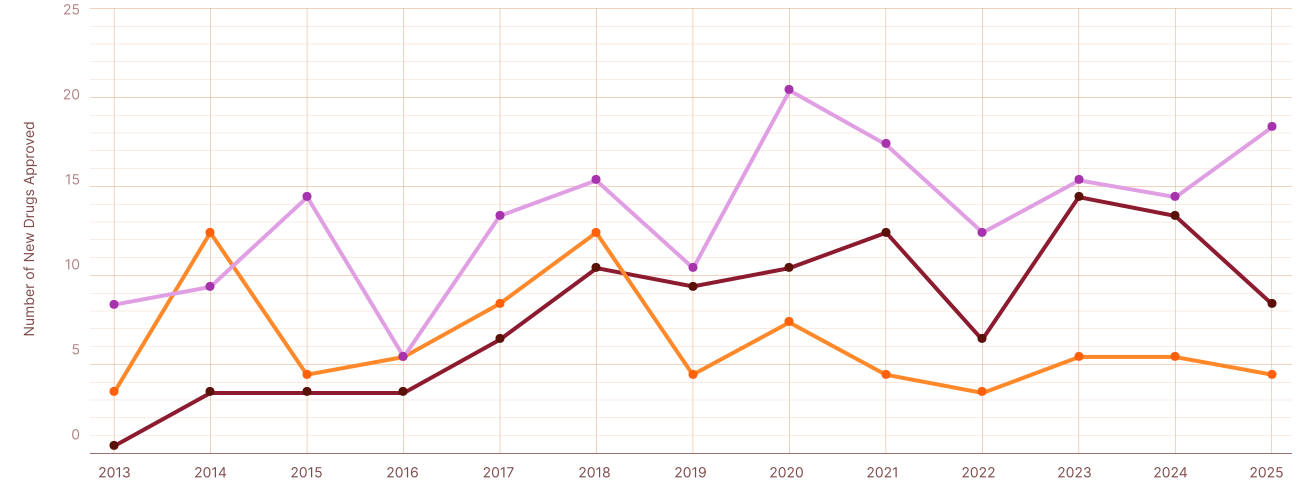
Antimicrobial approvals continue, but the innovation environment differs sharply from oncology and rare disease. Unlike many oncology and rare disease therapies, new antibiotics are often intentionally conserved, prescribed for short courses, and reimbursed in ways that do not reflect their public health value.

Stay Updated
Stay connected so that you don’t miss the latest AMR insights and updates.


