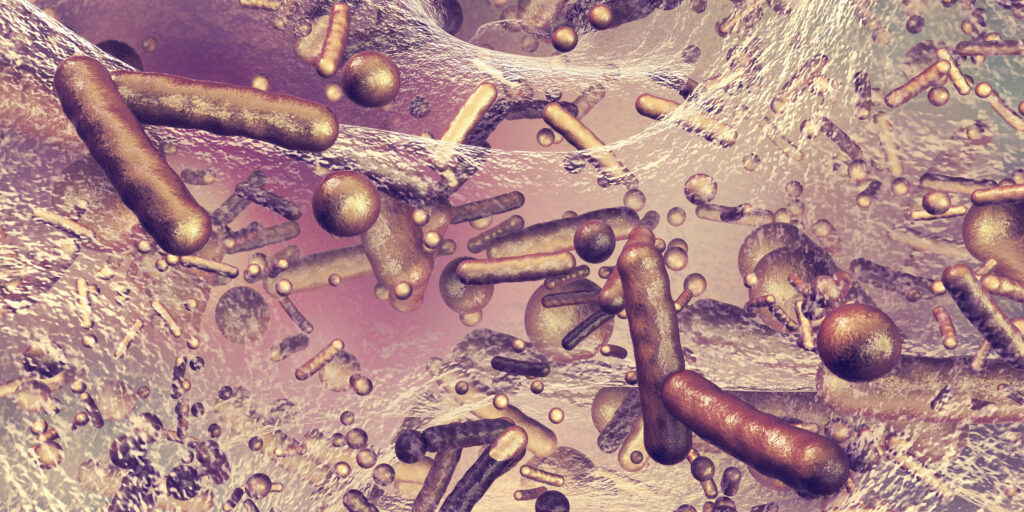
An antibiotic’s ability to kill bacteria depends partly on the conditions in which it encounters them. Within a biofilm, bacteria occupy a protective extracellular matrix that can make them difficult to eradicate. Disrupting that structure offers a potential treatment opportunity: release the bacteria in a more vulnerable state, then allow existing antibiotics and host defenses to clear them. “Disrupting a biofilm can make its resident bacteria more susceptible to antibiotics, even when their underlying resistance mechanisms remain intact.1,2
CMTX-101, an investigational antibody developed by Clarametyx Biosciences and presented at ID Week 2026, provides an early clinical test. In a cystic fibrosis study conducted alongside standard treatment, the company reported exploratory reductions in bacterial burden and inflammatory biomarkers.3
The opportunity is to improve treatment using antibiotics and immune defenses already available. Its value will depend on whether the biological activity observed translates into fewer or less severe exacerbations, less intensive treatment, or other meaningful benefits for patients.
Breaking the Structure, Then Clearing the Bacteria
MTX-101 targets bacterial DNA-binding proteins from the DNABII family, which help hold biofilms together by stabilizing a scaffold of extracellular DNA. Antibodies targeting these proteins can draw them away from the scaffold, causing the structure to collapse and release resident bacteria. The intended benefit is to make those bacteria more vulnerable to antibiotics and host defenses that can then kill or clear them.2,4
Researchers at the Abigail Wexner Research Institute at Nationwide Children’s Hospital and The Ohio State University examined antibiotic potentiation. A humanized anti-DNABII monoclonal antibody disrupted biofilms formed by six respiratory pathogens. Against the antibiotics tested, the released bacteria showed susceptibility equal to or greater than that of free-living bacteria grown in laboratory culture. The findings suggested that release could create a particularly vulnerable bacterial population.1
The team extended this work, examining antibiotic killing after antibody-mediated release of seven bacterial pathogens.2 The findings supported pairing disruption with an effective antibiotic, although testing one clinical isolate of each pathogen limited generalization across strains.
The researchers examined three isolates each of methicillin-resistant Staphylococcus aureus and nontypeable Haemophilus influenzae.5 Following antibody-mediated release, the bacteria showed increased susceptibility to antimicrobial peptides, including human beta-defensins and LL-37. This provides an experimental basis for investigating enhanced host-mediated clearance.
What the Early Human Study Actually Shows
Clarametyx reported a randomized, double-blind, placebo-controlled phase Ib/IIa study involving 42 people with cystic fibrosis and chronic Pseudomonas aeruginosa infection.3 It evaluated a single intravenous dose alongside standard care, including inhaled antibiotics and highly effective cystic fibrosis transmembrane conductance regulator modulators. The company reported meeting the safety and tolerability primary endpoint, generally good tolerability, and no detected neutralizing antibodies.
The release also reported exploratory reductions in bacterial burden and inflammatory biomarkers, together with preservation of lung function measured by forced expiratory volume in one second relative to standard care. It did not provide sufficient statistical detail to independently judge the size, consistency, or certainty of the additional benefit.
The IDWeek presentation described exploratory observations through day 28. The presenter acknowledged that bacterial burden also declined in placebo recipients receiving inhaled antibiotics. The relevant question is therefore how much activity the antibody adds to the existing regimen, rather than whether bacterial counts decline after treatment begins.
Dose selection adds another unresolved issue. The presenter, Chief Development Officer and Head of R&D Veronica Hall, described more favorable exploratory findings at 5 milligrams per kilogram than at 30 milligrams per kilogram and hypothesized that excess antibody could produce suboptimal binding. An audience member questioned the absence of a conventional dose response. The proposed binding explanation remains unconfirmed.
Larger studies would need to establish whether the pattern is reproducible and how antibody exposure relates to activity. Variability in a small study and other explanations remain relevant before the observation can provide a dependable basis for dosing.
Hall also interpreted lower Pseudomonas counts as an indirect indicator of biofilm destruction. That interpretation should remain distinct from direct evidence of disruption in participants: reduced bacterial burden does not, by itself, establish the mechanism responsible.
What Happens to the Bacteria After Release?
Biofilm disruption must be coordinated with clearance of the released organisms. In the CMTX-101 study, participants received inhaled antibiotics, leaving the effects of disruption during antibiotic off-cycles unresolved. A central safety consideration is whether bacteria released without adequate antibiotic coverage or immune clearance could spread or re-establish infection.
An experimental study illustrates why clearance matters. Separately, researchers at Texas Tech University Health Sciences Center used glycoside hydrolase enzymes to disrupt biofilms in a mouse wound model. Large-scale dispersal of motile bacteria caused systemic dissemination and lethal septicemia without antibiotic therapy. Concurrent systemic and topical antibiotics protected the animals. These findings identify a potential risk of biofilm disruption, but do not establish whether CMTX-101 poses the same risk in respiratory infections.6
The anti-DNABII researchers likewise acknowledged that released bacteria could re-establish a pathogenic biofilm at the original site or elsewhere. They proposed simultaneous antibody and antibiotic delivery to exploit the vulnerable state after release.2
Host defenses may also contribute. The research program has reported bacterial clearance without supplemental antibiotics in animal infection models, alongside experimental evidence of enhanced susceptibility to immune effectors. These findings support a potential role for host-mediated clearance, although its contribution in patients remains to be established.5
The accompanying regimen is therefore part of the therapeutic strategy. Antibiotic selection and timing need to support clearance during and after disruption, with follow-up assessing recurrence, dissemination, and outcomes during antibiotic off-cycles. Establishing safety will require evidence that released bacteria remain controlled beyond the immediate treatment period.
A Different Target for Antibody Treatment
The intended breadth of anti-DNABII treatment raises another question: can targeting a structural component found across tested biofilms support treatment across different organisms? Laboratory findings provide a basis for investigation, while clinical coverage remains to be established.
Pathogen-specific antibodies provide a useful comparison because their targets can also participate in biofilm biology. Gremubamab targets two components of P. aeruginosa: PcrV, involved in host-cell cytotoxicity, and the Psl exopolysaccharide, involved in colonization and tissue adherence. The distinction concerns molecular target and intended coverage, rather than a simple division between biofilm-directed and other antibacterial antibodies.
I investigators from the multinational COMBACTE-MAGNET collaboration reported that gremubamab did not meet EVADE’s primary endpoint for preventing P. aeruginosa pneumonia in colonized, mechanically ventilated patients.7 That prevention setting differs from chronic airway infection treatment and does not predict CMTX-101’s performance. It underscores the need to establish benefit in the intended clinical setting.
What Would Make Biofilm Disruption Clinically Useful?
For patients and clinicians, the decisive question is what adding the antibody changes. Bacterial counts and inflammatory markers can characterize activity, but a useful adjunct must justify its place through better infection control, improved health, or reduced treatment burden.
A presentation from the FDA at a 2018 workshop on inhaled antibacterial development discussed total pulmonary exacerbations, their severity, hospitalization duration, and days of intravenous antibacterial treatment as potential measures for non-cystic fibrosis bronchiectasis trials.8 It also explained limitations of time to first exacerbation, which excludes subsequent events and may miss differences in severity.
An initial microbiological response would become more compelling if it led to sustained infection control and fewer consequential clinical events. Repeat-dose studies will need to establish whether benefit can be maintained while released bacteria remain safely controlled. Reduced antibiotic use is another outcome to test, particularly because effective antibiotic coverage may remain essential to the approach.
CMTX-101’s early findings justify further evaluation. The next test is whether the vulnerability observed experimentally after biofilm disruption can translate into sustained infection control for patients.