
The Evolutionary Problem of Antimicrobial Resistance
Antimicrobial resistance (AMR) is typically framed as a clinical or pharmaceutical challenge, but at its core, it is an evolutionary process. Antibiotics create strong selective pressures within microbial populations. Bacteria that have acquired genetic changes (through one of several mechanisms) allowing them to survive drug exposure gain a temporary advantage, while susceptible strains are eliminated. Over time, this selection reshapes microbial communities, increasing the prevalence of resistant organisms.
These evolutionary dynamics can operate on fast time scales because bacterial populations are large and can undergo multiple rounds of replication rapidly. Random mutations, gene acquisition events, and recombination generate genetic variation continuously. When antibiotics are present, variants capable of surviving treatment can expand, allowing resistance traits to spread through bacterial populations. In this sense, the emergence of resistance is not an unusual biological event but a predictable outcome of sustained selective pressure.1
Viewing resistance through an evolutionary lens highlights a nuance familiar in evolutionary biology but less emphasized in the clinical context: resistance is not a binary property. The genetic changes that allow bacteria to evade antibiotics often alter other aspects of bacterial physiology. Those alterations can influence how well resistant strains compete with susceptible strains in different environments. As a result, the evolutionary consequences of resistance extend beyond survival in the presence of antibiotics and can continue to shape bacterial population dynamics after antibiotic pressure changes.
Viewing antimicrobial resistance as an evolutionary system suggests a different approach to stewardship: rather than simply reducing antibiotic use or rotating drugs on fixed schedules, clinicians may eventually be able to guide resistance trajectories using insights from evolutionary biology.
The Mechanisms That Create Resistance
Antibiotics exert their effects by disrupting essential bacterial processes, such as cell wall synthesis, protein production, DNA replication, or metabolism. Resistance emerges when bacteria acquire genetic changes that allow them to avoid or neutralize those effects. These changes may arise through spontaneous mutation or through horizontal gene transfer (HGT) from other microorganisms. Once present, the resistance trait can spread rapidly through bacterial populations under antibiotic selection pressure.
Several broad biological strategies allow bacteria to survive antibiotic exposure. A common mechanism involves modification of the drug’s molecular target. If a mutation alters the structure of the protein or enzyme that an antibiotic normally binds, the drug may no longer interact effectively with its target, reducing or eliminating its antimicrobial activity. Target modification underlies resistance to many drug classes, including macrolides, fluoroquinolones, and rifamycins.2
Another strategy reduces the amount of antibiotic that reaches its intended intracellular target. Some bacteria accomplish this by decreasing membrane permeability, limiting the entry of antibiotic molecules into the cell. Others rely on efflux pumps, membrane proteins that actively export antimicrobial compounds out of the cell before they can accumulate to toxic concentrations. Efflux-mediated resistance is particularly important in gram-negative bacteria, where multiple transport systems can contribute to multidrug resistance phenotypes.2
Bacteria may also neutralize antibiotics directly through enzymatic inactivation. Certain enzymes chemically modify or degrade antimicrobial molecules, rendering them ineffective. Beta-lactamases, which hydrolyze beta-lactam antibiotics, are among the best-known examples of this mechanism and have played a central role in the global spread of resistance to penicillins and related drugs.2
A final mechanism involves metabolic bypass pathways. In these cases, bacteria circumvent the antibiotic’s target biochemical step by activating alternative metabolic routes or acquiring replacement enzymes that perform the same function but are not inhibited by the drug. This strategy allows the organism to maintain essential cellular processes despite the presence of antimicrobial compounds.2
Each resistance mechanism alters core cellular processes in different ways, and the evolutionary costs of resistance vary widely depending on how the bacterium evades the antibiotic. The genetic changes required for resistance can alter cellular processes such as metabolism and membrane transport. As a result, different resistance strategies impose different physiological burdens on bacteria, which helps explain why some resistance traits persist even when antibiotics are absent, while others decline when selective pressure is removed.
Fitness Costs: Why Resistance Can Be Evolutionarily Expensive
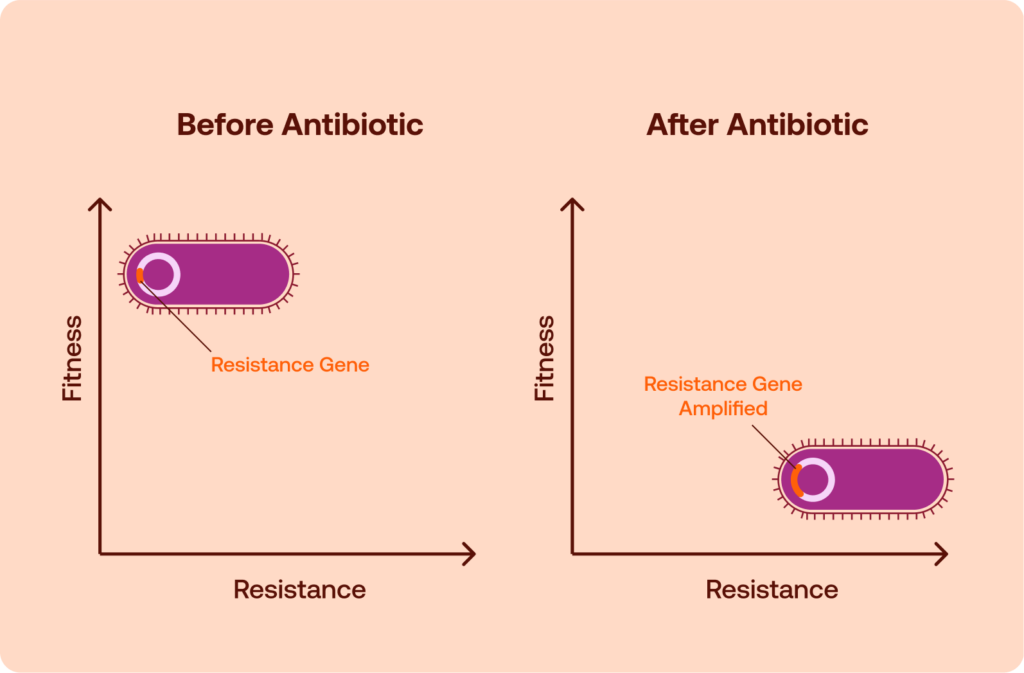
The genetic mechanisms that allow bacteria to resist antibiotics frequently alter fundamental cellular processes. Because those processes are optimized by natural selection for efficient growth and survival, resistance mutations can disrupt normal physiology, thereby reducing bacterial fitness in the absence of antibiotics.
A common example involves antibiotics that target the bacterial ribosome. Mutations that modify ribosomal proteins or ribosomal RNA can prevent antibiotics from binding effectively, but those same alterations may also reduce the efficiency of protein synthesis. Slower or less accurate translation can limit bacterial growth rates, placing resistant strains at a competitive disadvantage in the absence of antibiotics.
Resistance mechanisms based on efflux pumps can impose different physiological burdens. These membrane proteins actively export antibiotics from the cell, but they require energy to function and can alter membrane transport dynamics. Increased expression of efflux pumps may divert limited metabolic resources from growth or disrupt the balance of molecules moving across the cell membrane, thereby putting cells at a growth disadvantage.
Changes in membrane permeability can produce additional tradeoffs. Some bacteria evolve resistance by modifying outer membrane proteins that normally allow antibiotics to enter the cell. While reduced permeability can limit antibiotic uptake, it may also restrict nutrient influx, thereby affecting metabolic efficiency and slowing bacterial replication.
These physiological effects illustrate why resistance mutations sometimes carry measurable fitness costs in antibiotic-free environments. When resistant strains grow more slowly or compete less effectively than susceptible strains, the evolutionary advantage conferred by resistance may diminish once antibiotic pressure declines.
Why Resistance Does Not Always Disappear
Although resistance mutations can impose fitness costs, those costs do not necessarily persist over time. Bacterial populations evolve rapidly, and additional genetic changes can alter the evolutionary balance between resistant and susceptible strains. As a result, resistance traits that initially appear costly may remain stable or even become widespread long after antibiotic pressure has declined.
One important mechanism involves compensatory mutations. After an initial resistance mutation reduces bacterial fitness, subsequent mutations may restore normal physiological performance while preserving resistance. These compensatory changes can occur in the same gene that originally mutated or elsewhere in the genome, adjusting cellular pathways to offset the biological burden of resistance. Once such compensation occurs, resistant strains may regain competitive parity with susceptible bacteria, eliminating the evolutionary disadvantage that might otherwise have caused resistance to decline.3
The spread of resistance is also shaped by HGT, which allows bacteria to acquire genetic material from other organisms rather than inheriting it solely through vertical reproduction. Resistance genes can move between bacterial species through a range of mechanisms, such as conjugation, transformation, and transduction. Mobile genetic elements, including plasmids, transposons, and integrons, often carry multiple resistance genes and can disseminate them across microbial populations with remarkable efficiency.4
Plasmid-mediated resistance introduces additional evolutionary complexity. Many resistance determinants reside on plasmids, which replicate independently of the bacterial chromosome. Although plasmids can impose fitness costs on their host cells, they may persist through mechanisms such as high transfer rates between bacteria or compensatory adaptation that reduces their metabolic burden. This phenomenon has been described as the plasmid paradox: despite their potential cost, plasmids carrying resistance genes can remain stable within bacterial populations over long periods in the abscence of antibioticswit.5,6
Another factor that promotes persistence is co-selection. Resistance genes frequently cluster on the same mobile genetic elements, meaning that exposure to one antibiotic can simultaneously select for resistance to several others. In such cases, reducing the use of a single drug may have little effect if other antibiotics continue to select for the same genetic elements. Even when the original selective pressure disappears, continued exposure to unrelated antimicrobials can maintain resistance in the population.4
These evolutionary processes help explain why resistance does not always decline after antibiotic use decreases. Even when a resistance mutation initially imposes a measurable fitness cost, the evolutionary landscape surrounding that mutation can shift over time. Compensation, gene transfer, plasmid persistence, and co-selection all provide pathways through which resistance traits can stabilize within bacterial populations.
Real-world experience reflects this complexity. Some interventions that reduce antibiotic use have been followed by measurable declines in resistance, while others have produced little change. Understanding why those outcomes differ provides important insight into the evolutionary dynamics of antimicrobial resistance.
Natural Experiments in Resistance Reversal
If resistance carries evolutionary costs, reducing antibiotic use might allow susceptible strains to regain a competitive advantage. Several public health interventions have created real-world conditions in which this possibility could be evaluated. These natural experiments provide some of the clearest evidence about whether resistance can decline once selective pressure is reduced.
A widely cited example comes from Finland in the 1990s. In response to rising macrolide resistance among group A streptococci, national health authorities implemented a campaign to reduce macrolide use in outpatient settings. As prescribing declined, surveillance data revealed a corresponding reduction in erythromycin resistance among Streptococcus pyogenes isolates. The decrease in resistance followed the drop in antibiotic consumption, suggesting that reduced selective pressure allowed susceptible strains to re-establish themselves within the population.7
This case demonstrates that resistance reversal can occur under the right evolutionary conditions. When resistance imposes a biological cost, and antibiotic pressure decreases, susceptible bacteria may outcompete resistant ones. Over time, this shift in competitive dynamics can alter the composition of circulating bacterial populations.
However, not all attempts to reduce resistance by decreasing antibiotic use have yielded similar outcomes. A study in Sweden examined the effects of a large reduction in trimethoprim prescribing on resistance patterns in urinary Escherichia coli. Despite a substantial decline in trimethoprim use, researchers observed little evidence that trimethoprim resistance decreased in the bacterial population. Resistant strains remained common even after the reduction in antibiotic exposure.8
Investigators suggested several explanations for the persistence of resistance in this case. One possibility was that the resistance determinants involved imposed little or no measurable fitness cost, allowing resistant bacteria to remain competitive even in the absence of antibiotic pressure. Another factor was co-selection: trimethoprim resistance genes were often linked to resistance determinants for other antibiotics on the same mobile genetic elements. Continued exposure to those other drugs may have maintained selection for the entire resistance cluster, preventing trimethoprim resistance from declining.
These contrasting examples illustrate the complexity of resistance dynamics in real populations. Reducing antibiotic use can sometimes shift evolutionary pressures enough to allow susceptible strains to regain dominance. In other cases, compensatory evolution, gene linkage, or minimal fitness costs allow resistance traits to persist despite major changes in prescribing patterns. Reversal is therefore possible, but it cannot be assumed.
Antibiotic Cycling: A Strategy That Has Borne Few Fruits
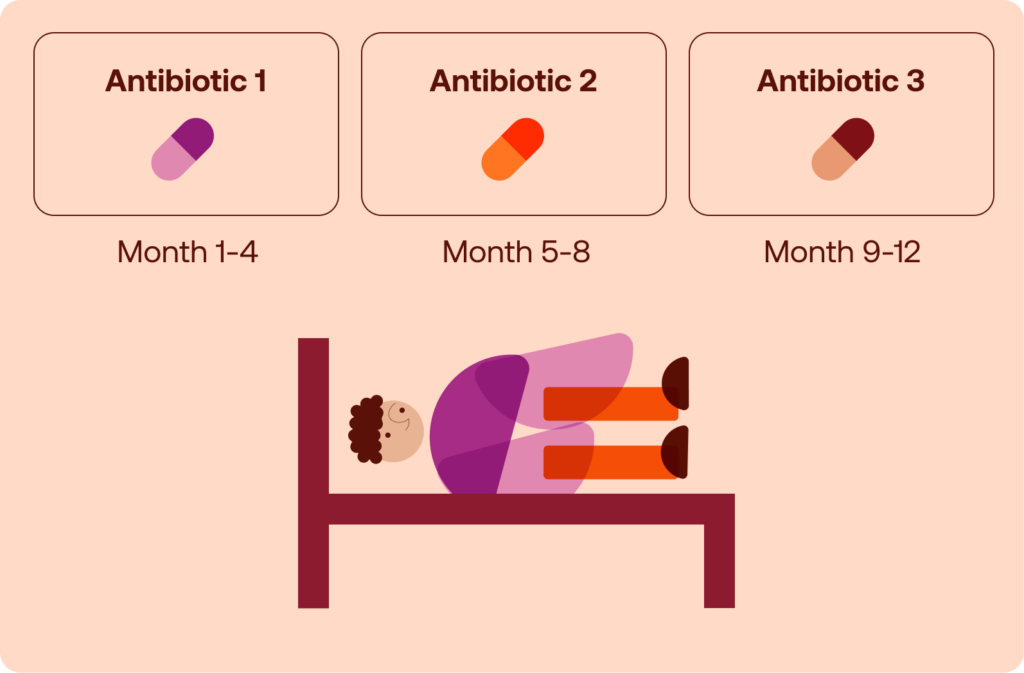
The idea that resistance might decline when selective pressure is reduced led to efforts to deliberately manipulate patterns of antibiotic use. One of the most widely discussed approaches has been antibiotic cycling, a stewardship strategy in which hospitals periodically rotate the primary antibiotic classes used for specific infections. The rationale is straightforward: by regularly changing the dominant therapy, clinicians might prevent bacteria from experiencing prolonged exposure to any single drug, reducing the likelihood that resistant strains will dominate.
In theory, cycling could disrupt the evolutionary advantage of resistant organisms. If a single antibiotic class is used heavily for an extended period, resistant strains may emerge or expand. Rotating to a different drug class might remove the selective advantage associated with the first antibiotic, potentially allowing susceptible strains to recover while selecting against organisms resistant to the newly introduced therapy. The concept attracted considerable attention because it seemed to offer a practical way to manage resistance through prescribing policies.
In practice, however, the results have been inconsistent. Studies examining antibiotic cycling in hospital settings have produced mixed findings, with some reporting modest improvements in resistance patterns and others finding little or no effect. Differences in study design, patient populations, local microbial ecology, and prescribing practices have made it difficult to draw clear conclusions from individual trials.
A systematic review of cycling interventions in hospitals illustrates the challenge. The analysis found that existing studies produced conflicting results and that the available evidence did not demonstrate that cycling strategies were superior to alternative approaches, such as antibiotic mixing, in which multiple drug classes are used concurrently across patients rather than rotated over time.9 The authors also noted the limited number of rigorous randomized studies evaluating these strategies.
These findings suggest that simple rotation schemes do not reliably alter the evolutionary dynamics of bacterial populations. Resistance evolution depends on a complex interaction of genetic mechanisms, microbial ecology, and antibiotic exposure patterns. Changing prescribing practices on a fixed schedule may not be sufficient to overcome those underlying forces.
Collateral Sensitivity: The Evolutionary Trade-Off Opportunity
The mixed results of antibiotic cycling reflect a broader reality: bacterial evolution does not respond predictably to simple prescribing patterns. However, research in evolutionary microbiology has identified a more structured phenomenon that may offer a way to guide resistance dynamics more deliberately. This concept, known as collateral sensitivity, arises when a genetic change that confers resistance to one antibiotic simultaneously increases susceptibility to another.
Experimental evolution studies have demonstrated that the fitness trade-offs inherent in bacterial adaptation can recur during the evolution of resistance. Laboratory experiments in which bacterial populations are exposed to gradually increasing antibiotic concentrations have shown that resistance mutations often generate predictable patterns of cross-resistance and collateral sensitivity across multiple drugs. These relationships can form networks in which adaptation to one antibiotic alters susceptibility profiles across several others.10
To map these relationships, researchers often use experimental evolution platforms in which bacterial populations are exposed to controlled sequences of antibiotics over many generations. By repeatedly selecting for resistance and measuring resulting susceptibility profiles, scientists can construct resistance landscapes that describe how adaptation to one drug alters sensitivity to others. These landscapes reveal that resistance evolution often follows pathways constrained by underlying physiological trade-offs. In some cases, the order in which antibiotics are applied can influence which evolutionary routes bacteria take, creating opportunities to steer populations toward states that remain vulnerable to certain drugs. This concept — sometimes described as evolutionary steering — suggests that treatment sequences may be designed not only to cure the immediate infection but also to shape the resistance trajectories that follow.
Such patterns have important implications for antibiotic stewardship. If resistance to one drug increases vulnerability to another, carefully designed treatment sequences could potentially exploit these evolutionary constraints. Instead of selecting antibiotics solely based on immediate clinical effectiveness, therapy could be structured to steer bacterial populations toward evolutionary states that remain susceptible to future treatments.
The concept shifts the focus from simply suppressing resistance to actively shaping the evolutionary trajectory of bacterial populations. In principle, a sequence of antibiotics chosen to exploit collateral sensitivity relationships could limit the long-term accumulation of resistance. By anticipating the trade-offs associated with adaptation, clinicians might be able to guide bacterial evolution toward less dangerous outcomes rather than allowing it to proceed unchecked.
Limits And Instability of Collateral Sensitivity
Although collateral sensitivity offers an appealing framework for steering bacterial evolution, its practical application is constrained by several biological complexities. The tradeoffs that emerge during resistance evolution are not uniform across organisms, drugs, or genetic pathways. As a result, collateral sensitivity patterns observed in one bacterial species or experimental system may not appear in another.
One source of variability lies in the diversity of resistance mechanisms themselves. Different mutations can produce distinct physiological consequences even when they confer resistance to the same antibiotic. Because collateral sensitivity arises from those underlying physiological changes, the specific mutation that evolves can determine whether a vulnerability to another drug appears at all. Experimental studies have shown that evolutionary trajectories during resistance development can diverge across replicate populations, producing different patterns of collateral sensitivity or cross-resistance depending on which mutations arise first.11,12
Collateral sensitivity relationships can also vary across bacterial species. Differences in cell structure, metabolic networks, and drug transport systems influence how resistance mutations affect cellular physiology. As a result, trade-offs observed in one organism may not translate directly to others. Comparative studies examining multiple bacterial species have found that collateral sensitivity and cross-resistance patterns differ substantially across organisms, reflecting the diversity of resistance mechanisms and cellular responses to antibiotic stress.13
Another challenge involves the evolutionary stability of these tradeoffs. Even when collateral sensitivity initially emerges, continued adaptation may erode the vulnerability. Bacterial populations can acquire additional mutations that compensate for the sensitivity while maintaining resistance to the original drug. Over time, this process can transform an initially favorable tradeoff into broader cross-resistance, undermining treatment strategies that rely on predictable evolutionary relationships.14
These findings highlight the importance of approaching collateral sensitivity with caution; it represents a promising conceptual tool for guiding antibiotic strategies, but it cannot yet be treated as a universally stable property of resistance evolution.
Toward Evolutionary Guidance Strategies
The limitations of both simple antibiotic withdrawal and fixed cycling schemes point toward a more nuanced approach to stewardship that treats antimicrobial resistance as an evolutionary system that can potentially be guided rather than merely reacted to. Instead of assuming that resistance will fade once antibiotic pressure is removed or attempting to suppress resistance through rigid rotation schedules, this perspective focuses on shaping the selective pressures that bacterial populations experience over time.
At the center of this approach is the idea of evolution-guided stewardship. The goal is not simply to reduce antibiotic use but to manage how different drugs influence the evolutionary trajectory of bacterial populations. In this framework, antibiotic selection and sequencing are informed by knowledge of resistance mechanisms, collateral sensitivity relationships, and the genetic pathways through which bacteria typically adapt to antimicrobial exposure.
In practice, such an approach could resemble a more adaptive form of antimicrobial stewardship. Treatment decisions might incorporate pathogen-specific resistance mechanisms identified through genomic diagnostics, allowing clinicians to select antibiotics that exploit known evolutionary tradeoffs. Regional surveillance data could help identify which resistance pathways dominate in which settings, enabling stewardship programs to adjust recommended therapies accordingly. Over time, computational models or machine learning tools might assist clinicians in choosing drug sequences that minimize the probability of resistance emergence while preserving the effectiveness of existing antibiotics.
Improved surveillance of resistance mechanisms may be critical to enable such strategies. Modern genomic tools make it increasingly possible to track not only which pathogens are resistant but also which specific genetic determinants underlie that resistance. Monitoring those mechanisms can provide insight into the evolutionary pressures shaping local microbial populations and help identify opportunities where resistance tradeoffs might be exploited.
Another element involves a strategic sequencing of antibiotics. Rather than choosing treatments independently for each infection, clinicians could consider how one antibiotic might influence the subsequent susceptibility profile. In systems where collateral sensitivity relationships are known, a sequence of drugs could be designed to steer bacterial populations toward evolutionary states that remain vulnerable to future therapies.
Experimental studies have shown that resistance evolution can create predictable patterns of susceptibility across multiple antibiotics. Mapping these collateral-sensitivity relationships raises the possibility of designing treatment sequences that deliberately exploit evolutionary trade-offs, thereby limiting the long-term accumulation of resistance.
Targeted reductions in the use of specific drug classes could also play a role. When resistance mechanisms impose meaningful fitness costs, decreasing selective pressure on a particular antibiotic may create conditions in which susceptible strains regain a competitive advantage. Combined with strategic sequencing and surveillance, such reductions could form part of a broader effort to reshape microbial populations rather than simply responding to resistance after it emerges.
Designing these strategies requires careful attention to the dynamics of evolution itself. The effectiveness of antibiotic sequences depends on factors such as the order in which drugs are used, the biology of the pathogen involved, and the evolutionary pathways available to resistant organisms.
This evolutionary perspective does not offer a simple solution to antimicrobial resistance. Instead, it suggests that stewardship strategies must account for the adaptive behavior of microbial populations. By integrating surveillance, evolutionary biology, and clinical practice, it may be possible to move beyond reactive approaches and begin shaping the selective environments that drive resistance in the first place.
Policy Implications and Research Priorities
Moving from theoretical models of evolutionary stewardship to practical implementation would require substantial advances in surveillance, data integration, and clinical research. The central challenge is understanding how resistance emerges, spreads, and evolves over time within specific microbial populations. Without reliable information about those dynamics, attempts to guide the evolution of resistance would amount to little more than educated guesswork.
High-resolution resistance surveillance is therefore a foundational requirement. Traditional antimicrobial susceptibility testing identifies whether pathogens are resistant to specific drugs, but evolutionary strategies demand more granular insight into how resistance is developing within a population. Monitoring changes in resistance prevalence over time, across geographic regions, and within specific healthcare settings would provide the baseline data needed to detect evolutionary shifts.
Genomic monitoring of resistance mechanisms represents a critical extension of that surveillance. Advances in microbial genomics have made it possible to identify the precise genetic determinants responsible for antibiotic resistance. Tracking those determinants allows researchers and clinicians to distinguish between different resistance pathways that may have distinct evolutionary consequences. Because collateral sensitivity and fitness costs depend on the underlying mechanisms of resistance, genomic data can help identify which bacterial populations may be most responsive to evolutionary stewardship strategies.
Clinical trials would also be necessary to determine whether evolutionary guidance can produce measurable benefits in real-world settings. Laboratory evolution studies have demonstrated that antibiotic sequences can influence resistance trajectories under controlled conditions. Translating those findings into clinical practice would require trials to evaluate whether treatment regimens designed around evolutionary principles can reduce the emergence of resistance, preserve antibiotic effectiveness, or improve patient outcomes.
Any such strategies would need to operate within existing antimicrobial stewardship frameworks. International initiatives, such as the World Health Organization’s Access, Watch, and Reserve (AWaRe) classification, already emphasize monitoring antibiotic use, promoting appropriate prescribing practices, and evaluating the impact of stewardship policies on resistance patterns. These programs focus on optimizing antibiotic use and improving surveillance rather than relying on blanket withdrawal policies, providing a policy framework in which more sophisticated evolutionary approaches could be tested and implemented.15
Evolution-guided stewardship would require coordination across microbiology laboratories, clinical researchers, public health agencies, and healthcare systems. The same infrastructure that supports modern antimicrobial stewardship programs could also provide the foundation for evaluating whether evolutionary strategies can help preserve antibiotic effectiveness over the long term.
Approaching stewardship through an evolutionary lens does not guarantee that resistance can be reversed or controlled. It does suggest that the selective environments created by antibiotic use can influence how resistance emerges and spreads. Designing stewardship strategies that deliberately account for those dynamics may offer one of the most promising avenues for preserving the effectiveness of antibiotics in the decades ahead.