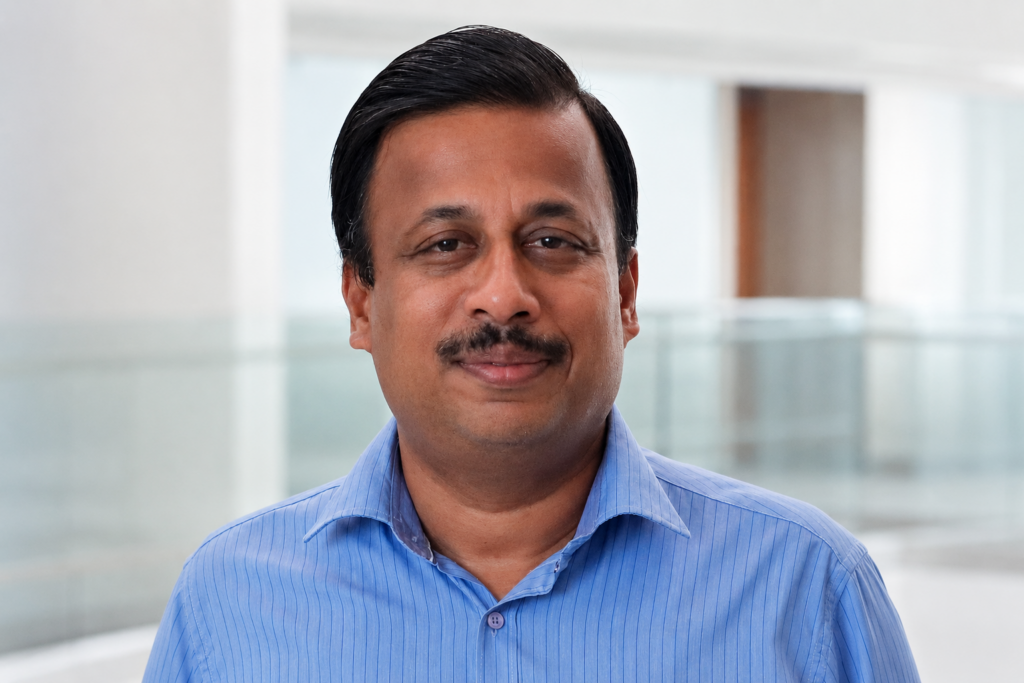
“You cannot stop antimicrobial resistance,” says Jayaseelan (Jay) Murugaiyan. “Antimicrobial resistance is ancient.” But we can definitely slow it down—if we use multiple strategies simultaneously. “You have to control the bad guys,” he says.
Murugaiyan, a professor of biological sciences and health engineering at SRM University in Andhra Pradesh, India, leads a working group investigating antimicrobial resistance and biofilm development of WHO priority pathogen, Acinetobacter baumannii. Murugaiyan is also a leading AMR Ambassador, having joined the network in 2018, and has spearheaded an international collaboration on AMR in biofilms, helped convene an international AMR meeting at his university, and contributed to leading a scholarly collaboration on new candidates to replenish the faltering antibiotic pipeline.
When did AMR become the problem you wanted to work on—and why?
I started considering the problem of antimicrobial resistance after moving back to India in 2018. I’m a proteomics guy by training, and shortly after moving back, I began exploring the issue and gave it a lot of thought. This exploration led us to Acinetobacter baumannii, a WHO priority pathogen and a genuinely serious threat.
I wanted to know whether this particular bacterium was a problem in the region around my university, so I initiated the project through a One Health perspective. We went around collecting veterinary, environmental, and human samples to study the issue.
Why was it important to study Acinetobacter baumannii and its association with AMR and biofilm-associated infections?
Acinetobacter baumannii is prone to biofilm formation for several reasons, including its ability to readily adapt to diverse environments. Unfortunately, one of its environmental adaptation traits is that it adheres to medical hardware and can withstand common hospital cleaning and sanitation protocols.
Biofilms are an incredibly clever bacterial strategy. Specifically, bacteria form a barrier that keeps antibiotics and antimicrobials from reaching them. While they’re hidden under this barrier, or film, they also tend to acquire resistance.
How do you study AMR in biofilms?
Studying biofilms is challenging, but today we use a range of modern technologies and molecular methods, which allow us to apply and study biofilm disruptors. Biofilm disruptors are molecules that don’t act against bacteria but instead neutralize them by silencing their ability to form biofilms.
One of our [research] objectives is to look at biofilms in real time. In the real world, if there’s a wound, a biofilm forms with multiple bacterial species, often including fungi. However, in the laboratory we build biofilms using a single bacterium, and even with advanced technologies, we have miles to go before we can study the complexity of actual conditions.
Our goal is to develop a way to read a biofilm’s architecture so that you can design treatment procedures and initiate treatment accordingly. However, in the lab today, we work only with monocultures. So there is progress to be made to better match actual conditions to what we are studying in the lab.
How has the AMR ambassador network helped you?
We’ve done a lot of activities together. The first was an AMR relay that started and ended in Australia—24 hours, all in one go. Scientists from different parts of the world gave lectures on AMR, and people from their regions joined and listened for an hour or so.
There were also AMR masterclasses, where speakers gave many lectures, myself included. We have also conducted extensive publishing activity, including “The Chase and the Race,” a successful paper published in the Antibiotics Journal at the end of 2021.
On one occasion, Dr. Maarten van Dongen from the Netherlands brought 12 UK scientists to our university in India, and we hosted AMR Insights for a three-day event called AAMR and Future of Antibiotics. We had a wonderful session and were able to get across to the students just how important this work is.
We’ve also collaborated on a series of publications. The AMR Ambassador Network played a major role worldwide, and thanks to complimentary membership, many students were able to participate.
In the future, when people look back at your research, what impact do you hope to have had?
I’m a professor whose main goal is to further knowledge. I invest in my students, and I’m creating scientists. I enthusiastically welcome international students who want to come to my university for a PhD, an exchange program, or a collaboration to advance this important work.
What would you do if you had unlimited funds?
I’d direct the funds to establish a molecular diagnostic center from a One Health perspective. That’s very important when there’s an outbreak. Our labs could determine what the outbreak is and how best to address it. Even in the absence of a large outbreak, we need to be better positioned to identify infection-causing bacteria so clinicians can prescribe the right antibiotics more effectively. The Indian government is involved in a scheme called ‘One Day, One Genome ’, so in the future, all clinics should be positioned to operate this way.